
Spectrum Healthcare Environmental Services
Back to What We Defeat
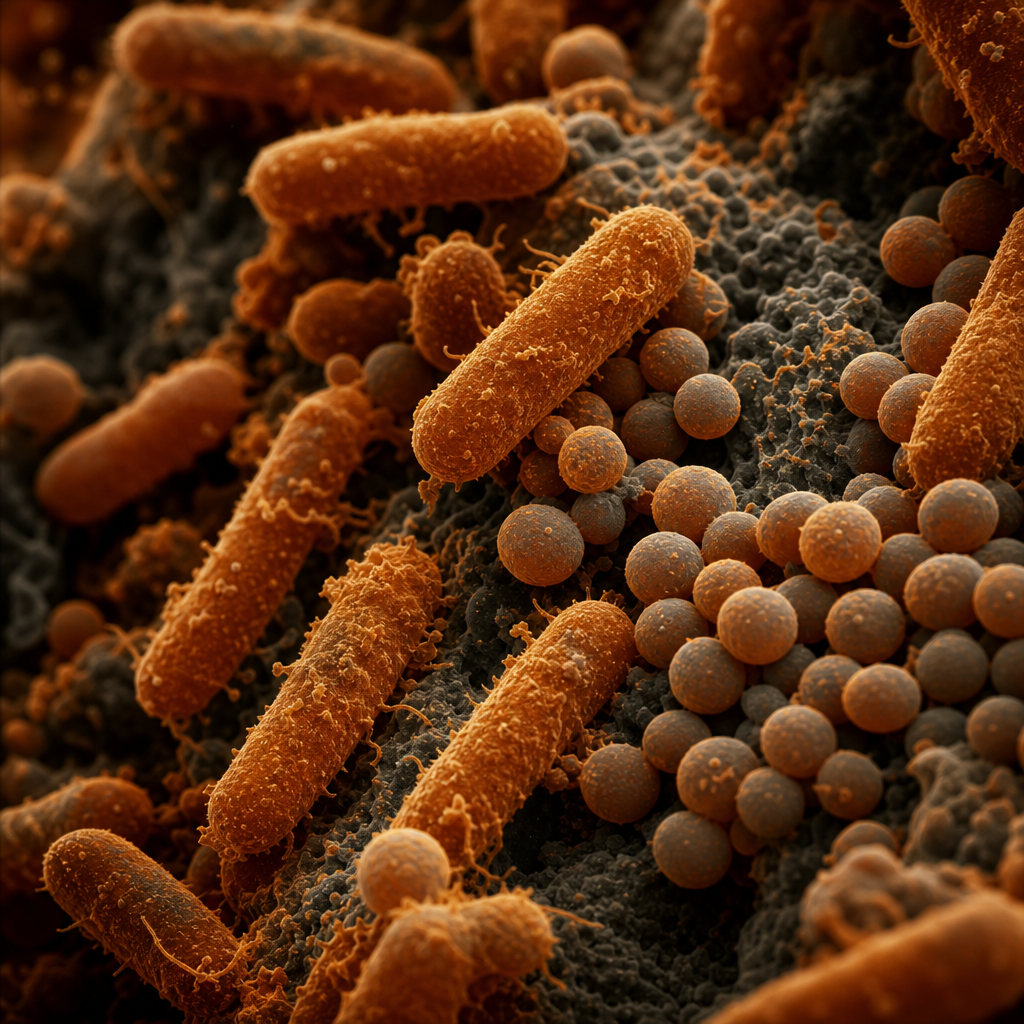
Microscopic visualization of bacteria cellsBacterial Threats

Drug-Resistant Bacteria on Hospital Surfaces

Most gram-positive bacteria—including MRSA, VRE, and spore-forming Clostridioides difficile—survive for weeks to months on dry inanimate surfaces. Contaminated bed rails, call buttons, and equipment become silent reservoirs that transfer to the hands of healthcare workers and on to the next patient. Correct disinfectant selection and dwell time is the difference between a clean surface and an infection source.

The Pathogens We Target

Each of these organisms poses a distinct, documented risk in healthcare settings—and each requires the right disinfectant applied the right way.

MRSA

Methicillin-resistant Staphylococcus aureus

Survives 7 days to 7 months on dry surfaces

A leading cause of surgical-site, bloodstream, and skin infections. Staph aureus persists longer at low humidity and readily transfers from surfaces to hands (up to 100% transfer efficiency in lab studies), making terminal disinfection essential between patients.

C. difficile

Clostridioides difficile (spores)

Spores persist up to 5 months

C. diff forms hardy spores that resist many common disinfectants and alcohol-based hand rubs. Sporicidal agents (such as EPA-registered bleach solutions) applied at proper concentration and contact time are required to break transmission in patient rooms.

Tuberculosis (TB)

Mycobacterium tuberculosis

Viable 1 day to 4 months on surfaces

While TB spreads primarily through airborne droplet nuclei, tubercle bacilli can remain viable on surfaces and in dust for months. Control combines ventilation and respiratory protection with rigorous environmental cleaning of patient-care areas.

VRE

Vancomycin-resistant Enterococcus

Survives 5 days to 4 months

Enforcing routine environmental cleaning measures has been shown to significantly reduce VRE acquisition, underscoring the direct link between disinfection and infection rates.

Acinetobacter baumannii

Multidrug-resistant A. baumannii

Survives 3 days to 5+ months

A notorious ICU pathogen linked to outbreaks traced directly to contaminated surfaces and equipment. The number of environmental isolates often correlates with the number of colonized patients.

Why a Designated EVS Company Matters

Because these organisms survive so long and resist ordinary cleaning, a general janitorial wipe-down is not enough. A dedicated EVS team using EPA-registered, hospital-grade disinfectants at validated dwell times is the frontline defense that keeps resistant bacteria from reaching the next patient.

Peer-Reviewed Research

The evidence behind our protocols. Explore the published studies and authoritative guidance below.

Protect Your Patients. Protect Your Facility.

Spectrum delivers the specialized, survey-ready disinfection that keeps these pathogens out of your facility—every shift, every room, every day.